
close








Optimal Thinking Leadership

Why Settle for Good or Great When You Can Lead at Your Best?
By Rosalene Glickman, Ph.D., creator of Optimal Thinking
When you’re faced with a tight budget, a difficult person, confusion about a career choice, or frustration when obstacles obscure your goals, do you ask: “How can I/we make the most of this situation?” or “What’s the best thing I/we can do under the circumstances?” Do you make decisions by considering your options, and then choose the best one?
If you answered “Yes”, you employ Optimal Thinking. Actually, we are all Optimal Thinkers. Some people use Optimal Thinking rarely, others use it more often, but most people use it sporadically because they haven’t been educated to use this peak form of thinking consistently.
In This Article
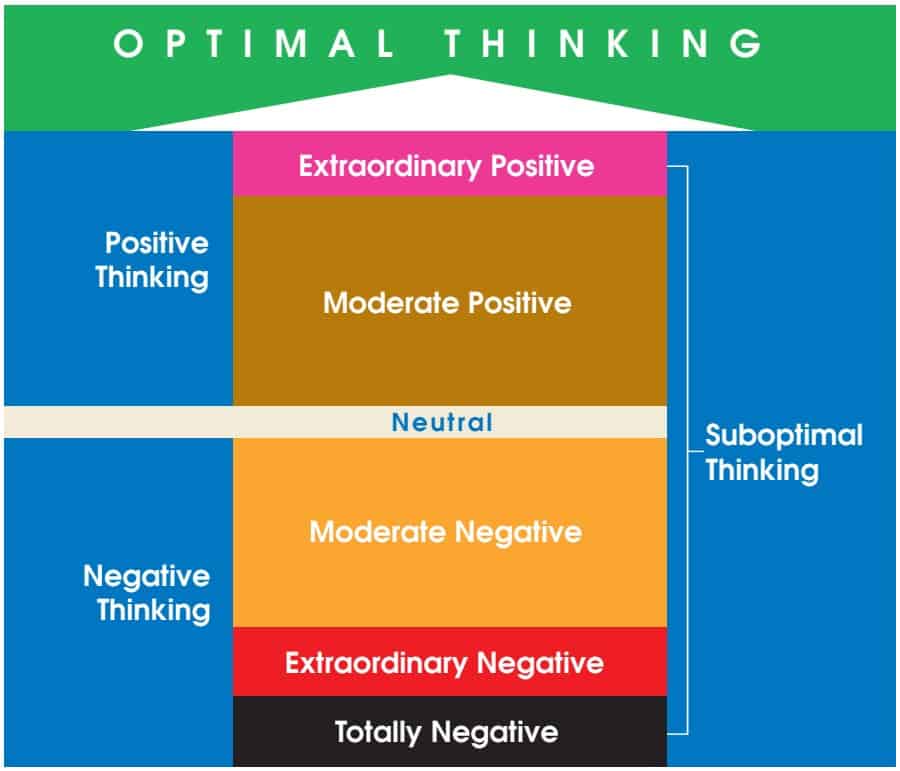
When you use Optimal Thinking, you choose the best actions to accomplish what’s most important. You employ the mental software that empowers you to be your best and stops you from settling for second best.
But how do you know what’s best? Actually “the best” has a different meaning for each of us. When considering the best criteria for a career position, one Optimal Thinker may think that the optimal choice is the one that offers the highest compensation in the most convenient location. Another may choose to be part of a corporate culture where innovation and optimization flourish, and may be less concerned with monetary compensation.
When you employ this superlative form of thinking, you automatically use words like “highest”, “most productive”, and “optimize.” For example, “What’s my/our highest priority?” “What will make each task today most enjoyable/most profitable?” and “How can I maximize my resources today?”
But, you may have noticed that your thinking is not always in your own best interest. Some executives perform exceptionally well and achieve great results for a while, but their performance is remarkably erratic. These executives cycle back and forth between extraordinarily positive and extraordinarily negative performance.
Others perform exceptionally well and achieve great results, then slip into moderate performance. These executives fall prey to an internal power struggle. Such thinking patterns are best resolved with consistent Optimal Thinking.
In the workplace, you can have a mission, guiding principles, critical success factors, strategic and tactical plans, but if your people are thinking and processing information suboptimally, results will be compromised. Even if you implement popular process management programs such as Six Sigma, and hire people with outstanding skills, every time someone in your organization thinks suboptimally unnecessarily, efficiency, effectiveness, productivity and profits are reduced.
Your Optimal Thinking 360 Assessment reveals your pattern. These are common.
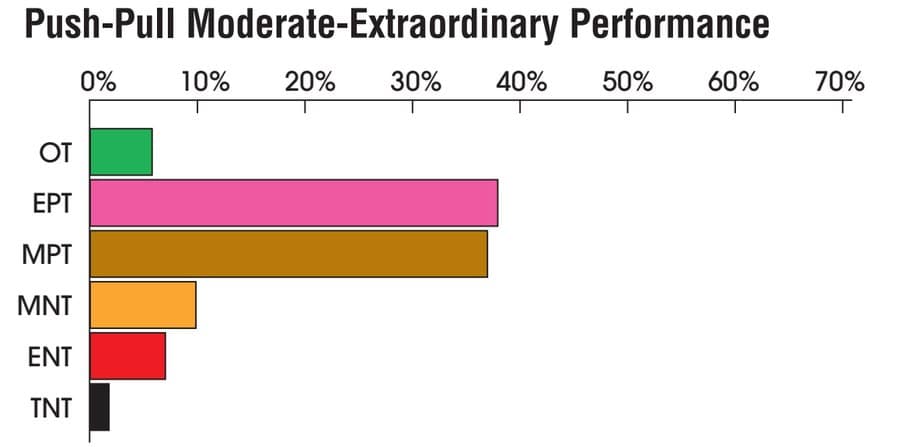
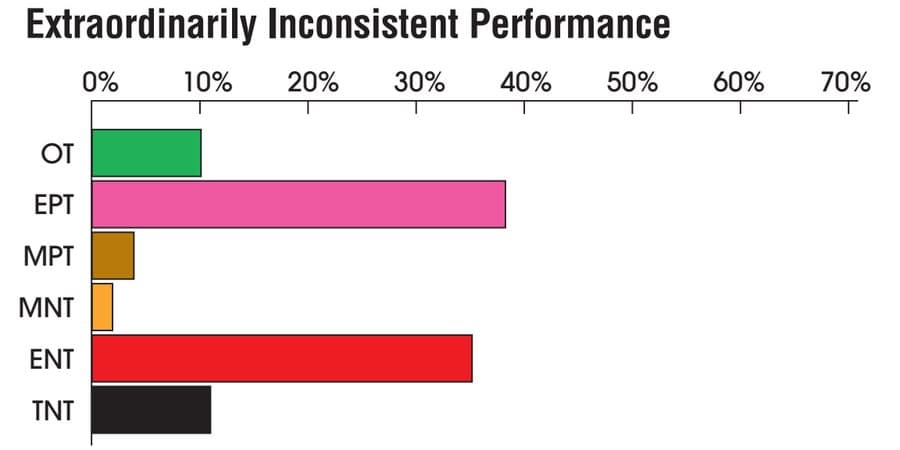
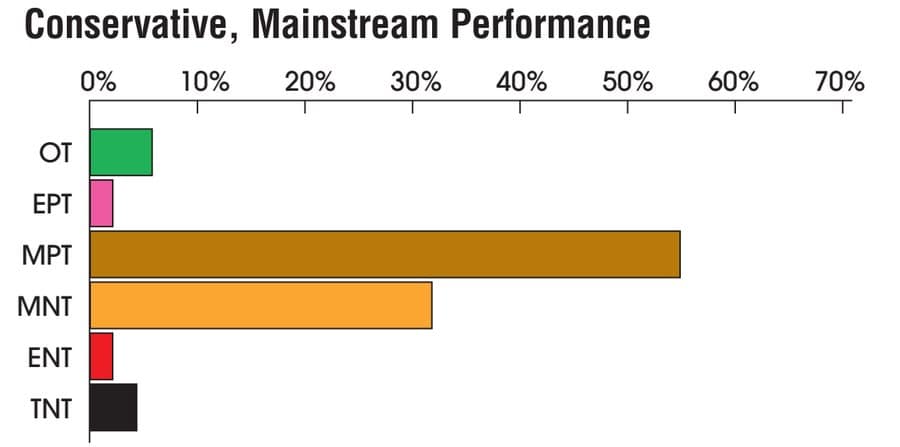
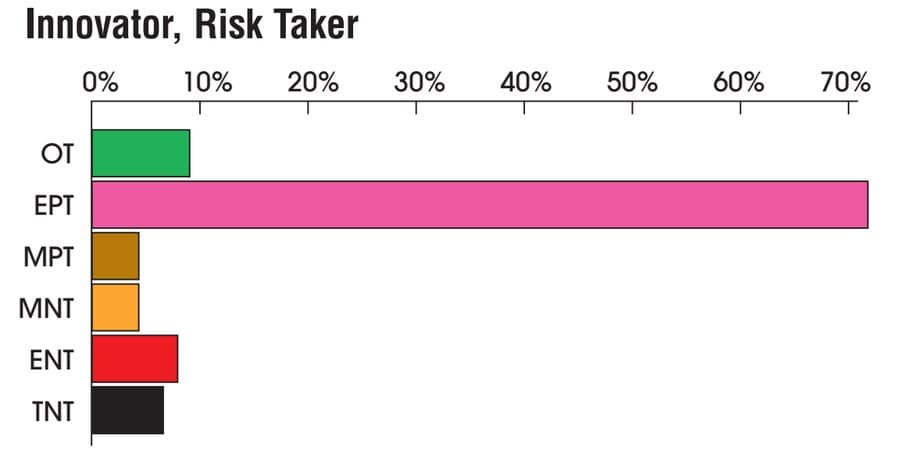
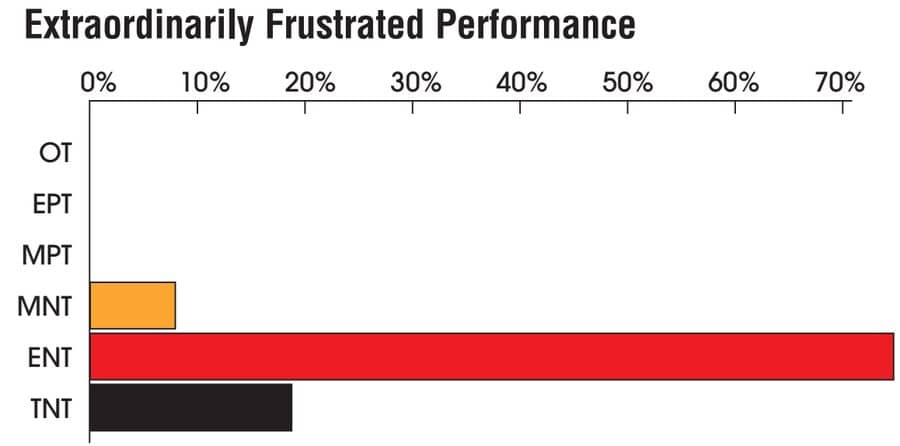
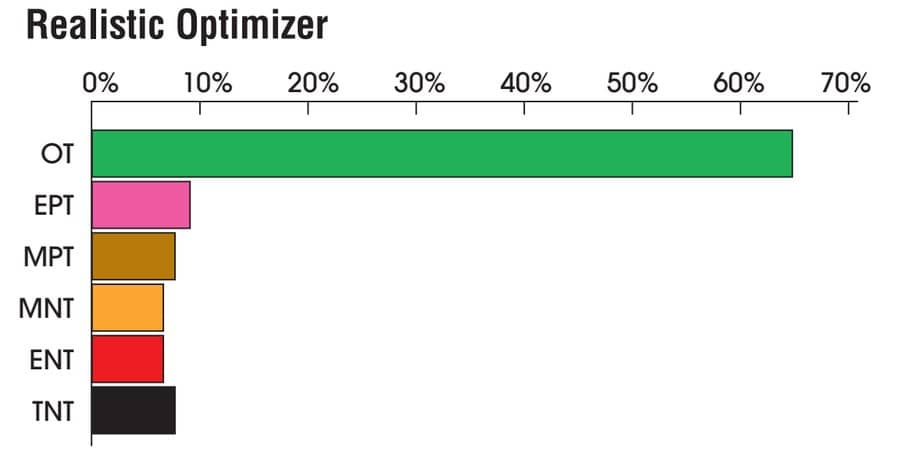
OT Optimal Thinking | EPT Extraordinary positive | MPT Moderate positive | MNT Moderate negative | ENT Extraordinary negative | TNT Totally negative
Suboptimal positive thinkers focus on achieving good, better, and great results.
Optimal Thinkers focus on achieving the best possible results.
Suboptimal positive thinking leaders focus on an important priority.
Optimal Thinking leaders consistently focus on the most important priority.
Suboptimal positive thinking leaders improve profits, manage expectations, increase the customer base and the frequency of transactions.
Optimal Thinking leaders optimize them.
Optimal Thinking leaders rise above managing, as managing can be a mere step above incompetence. We rise above improving, as improving is usually a “take it to the next level” linear strategy. We take a quantum leap directly from Bad to Best, Good to Best or Great to Greatest.
Moderate Positive
Motivated by acceptance, fitting in, being part of the mainstream
Extraordinary Positive
Motivated by being remarkable, exceptional, and making a difference
Optimal Thinking
Optimally self-motivated to be your best, without reward or threat
Optimal Thinkers are realistic. We understand that all levels of thinking are valuable because they provide us with feedback, give us reality checks, and serve as optimization signals. We know that many people think in positive terms, yet their thinking is moderate. These people are motivated by acceptance, fitting in, being part of the mainstream. They work well in administrative and customer service positions. Extraordinarily positive thinkers, on the other hand, are motivated by being remarkable, out of the ordinary, exceptional, and making a difference. Extraordinary positive thinkers are innovators and great sales people. Many senior executives are extraordinary positive thinkers. Clearly, the top performing leaders are generally Optimal Thinkers, with a high percentage of extraordinary thinking.
Now here’s something to think about. Moderate positive thinkers and extraordinary positive thinkers are motivated by opposing drivers. Moderate positive thinkers avoid actions that will lead to rejection, while extraordinary positive thinkers actually reject being ordinary. The different levels of positive thinking can be highly problematic when they are not properly understood. In a workplace team, the extraordinary positive thinker will be the energizer, and could perceive the moderate positive thinker as a “wet blanket”. The extraordinary positive thinker must respect the moderate thinker’s need for acceptance to bring out the best in them.
Basically, it comes down to this: The more you invest in Optimal Thinking, the more optimal your results will be.
When you make the choice to be your best regardless of the circumstances, and to give every moment your all, Optimal Thinking is your vehicle. You do your best with the hands you are dealt. Unlike moderate positive thinkers and extraordinary positive thinkers who are motivated externally (by being accepted, or by being remarkable and making a difference), Optimal Thinkers are optimally self-motivated. You don’t need reward and recognition programs, or a threat to do your best.
You accept what is out of your control, and optimize what is within your control.
You ask the best questions, to invite the best solutions. You might also employ optimal visualization techniques that top athletes use to picture themselves running their best race. When making choices, you make sure that your heart and mind are in agreement. If they are not in agreement, you consider more options.
Now, although it may appear simple, becoming an instinctive, consistent Optimal Thinker requires dedication and education. You may be wondering: “Is it worth the effort?”
Ask yourself, “Is functioning suboptimally in my best interest or in the best interest of my organization?”
If you are locked into a pattern of reacting to external demands rather than pursuing a visionary direction, turnaround leadership is best exercised with Optimal Thinking. By implementing Optimal Thinking as a key initiative, you can identify and resolve the source of suboptimal market share, suboptimal cash flow, suboptimal processes, and all suboptimal performance: suboptimal thinking.
You may be in a company where you can be proactive and execute transformation leadership. By implementing Optimal Thinking as a key initiative, you can champion a long-term supreme vision, establish the best context and direction, align the organization, and execute optimally consistently. Keep in mind, in the absence of Optimal Thinking, slogans like “Simply the best!” are an empty promise. Organizational optimization requires Optimal Thinking.
What’s most exciting is that it’s easy and fun to integrate Optimal Thinking into an organization. Optimal Thinking is not foreign to any of us, and people want to use it consistently.
So how do we do it?
A start-to-finish mentality and persistence is a prerequisite. Leaders must motivate, inspire and model Optimal Thinking to establish an Optimal Thinking culture. A select number of key initiatives will be selected and followed through to full assimilation into the fabric of your organization. As people support what they help to create, everyone must embrace optimization, the adaptiveness required, and take pride in being Optimal Thinkers. Then, when they are confronted with problems, they will respond optimally with: “Here is my problem. This is why I believe this is the best solution. What do you think is best?”
Summary
To summarize, thoughts are the parents of personal and organizational performance. Optimal Thinking empowers you and any organization to sweep past the bad, the good and even the great into the realm of the highest and best.
Your Next Step
Are You an Optimal Thinking Leader?
Discover the thinking that drives your leadership with the Optimal Thinking 360 Assessment, or optimize it one-on-one. Optimal Thinking Executive Coaching averages 11.98x ROI in 12 months.
Explore the Leadership 360 Executive Coaching With Dr. Glickman
Rosalene Glickman, Ph.D. is the creator of Optimal Thinking and best-selling author of Optimal Thinking (Wiley, 7 printings, 17 languages), hailed by academia and the media as “the successor to positive thinking” and “the basis of best practices and peak performance.” She has provided more than 32,000 hours of one-on-one coaching to Fortune 500 and YPO leaders. Based on those hours, Optimal Thinking Executive Coaching averages 11.98x ROI in 12 months.
Her clients include Johnson & Johnson, the U.S. Army, Delta Air Lines, Coca-Cola, BP, Bristol-Myers Squibb, Warner Bros., Red Bull, the Internal Revenue Service and the Young Presidents’ Organization. She has been featured on Bloomberg TV, Fox News Channel and CBS Weekend Magazine and in USA Today, Inc. magazine, Government Executive Magazine and Association Management Magazine.
Dr. Glickman has been repeatedly honored by the media as “Australia’s most successful woman.” She is the recipient of the “Woman of the Year” award for National Business Women’s Week in Hollywood, was nominated for The Order of Australia, and has ranked within the top 20 global personal development experts for 25 years. She holds a Ph.D. in Psychology and lives in Los Angeles.

Faced with tough workplace challenges? Ready to optimize your leadership and performance?
Optimal Thinking Executive Coaching averages 11.98 x ROI in 12 months.





Comments are closed.